


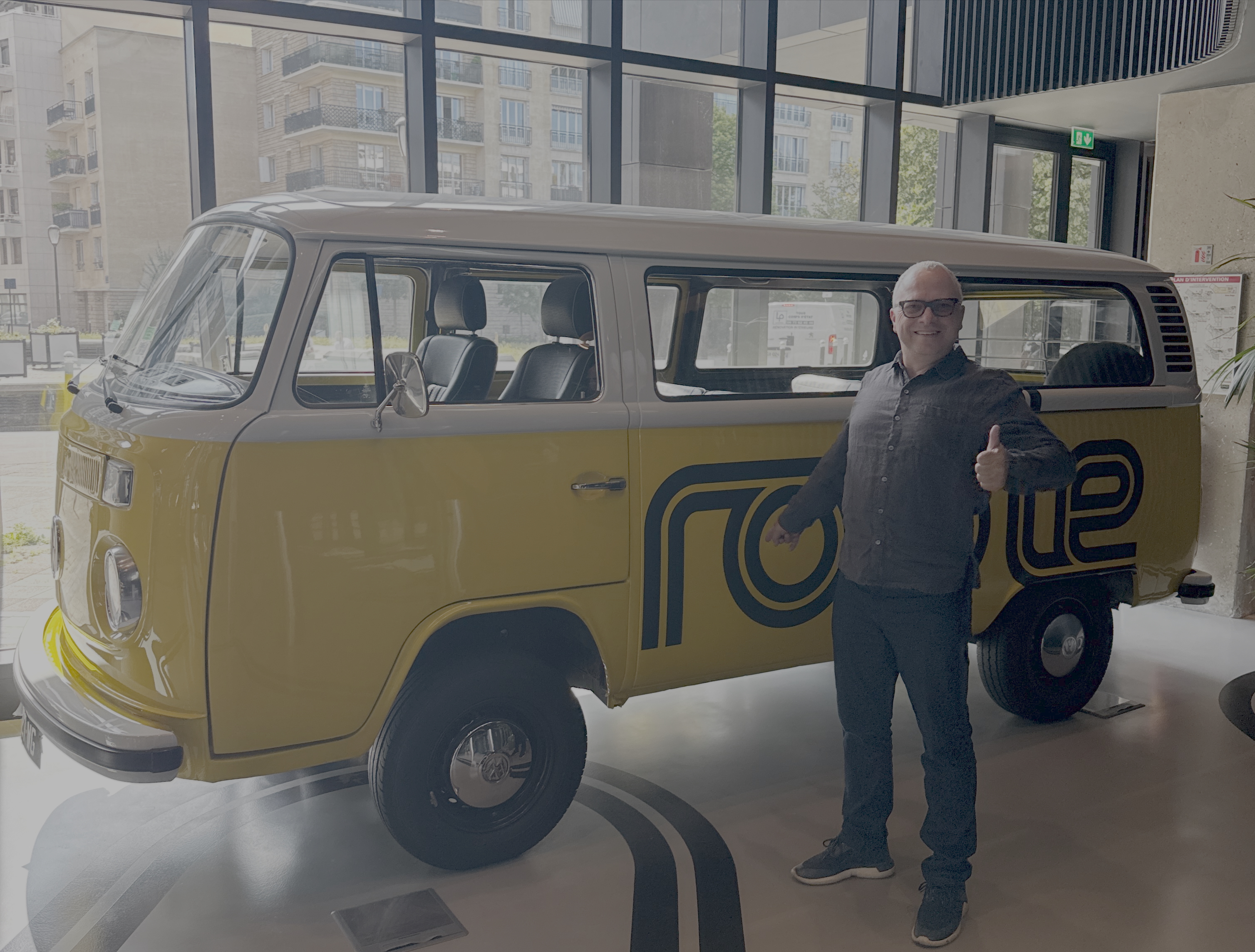
The Nodle network now has a proof point at genuine scale. Nearly a million active devices, a 40% recovery rate, and 9 million euros in demonstrated value recovery. For enterprises evaluating whether crowdsourced BLE tracking is ready for production workloads, the answer from France is clear. Distributed, Decentralized Physical Infrastructures (DePIN), crowd-sourced location networks can solve big problems in affordable ways that customers love.
Roole is one of France's largest automotive membership clubs, a model roughly comparable to AAA in the United States. The company sells bundled packages to drivers through car dealerships that include roadside assistance, top-up insurance guarantees, and, for the past three years, a Bluetooth-based stolen car recovery service. That recovery service runs on Nodle's ConnectX platform, which uses a crowdsourced network made of millions of daily active smartphones to detect and locate Bluetooth Low Energy tags without GPS hardware, cellular contracts, or fixed reader infrastructure.
The model is straightforward. Roole places a small, inexpensive BLE tag in each customer's vehicle. When a car is reported stolen, the Nodle network's millions of smartphones passively scan for that tag's signal as people go about their daily lives. When a phone in the network passes within range, it relays the tag's location back to the platform. No dedicated tracking hardware is required on the network side. The entire detection layer is powered by ordinary people carrying ordinary phones.
Three years into deployment, the results tell a compelling story about what works in the DePIN space and crowdsourced BLE tracking at commercial scale.
Highlights
The Bluetooth recovery system now finds nearly 40% of stolen cars. That figure trails dedicated GPS trackers by a modest margin, but at a fraction of the hardware and connectivity cost. For customers, the math is simple. Each recovered vehicle represents an average of 15,000 euros in saved value. Across the network, that adds up to roughly 9 million euros returned to insurance companies and drivers.
The frustrating part is regulatory. French authorities do not classify the Bluetooth system as a GPS tracker. That classification gap means insurance companies cannot offer premium discounts to customers who use it. The recovery data makes a strong case for reclassification, but bureaucratic categories move slowly. This is a familiar pattern in connected device markets. The technology outpaces the regulatory framework, and proving equivalence to legacy categories requires patience and sustained advocacy.
One of the more surprising findings is how much customers value having a tangible device in their car. The BLE tag is small and inexpensive, but its physical presence is reassuring. Drivers feel protected in a way that a software-only solution does not replicate.
That psychological effect has real business consequences. Customers who receive a device are more likely to install the mobile app. Those who install the app churn at lower rates. The device acts as an anchor for the entire service relationship. In an era when many companies rush toward purely digital solutions, Roole's experience suggests that a small physical touchpoint can drive outsized engagement.
Traditional stolen vehicle recovery relies on GPS trackers with cellular modems. Those devices cost hundreds of dollars, require power, and come with monthly connectivity fees. The economics work for luxury vehicles but fall apart quickly as you move down the price spectrum.
The Nodle-powered approach inverts those economics. The BLE tags are cheap. The network connectivity cost is zero at the device level because detection is crowdsourced through smartphones already in people's pockets. That cost structure is what allowed Roole to deploy tracking at scale through mass-market car dealerships rather than limiting it to high-end vehicles. It also means the technology can follow Roole into adjacent markets where per-unit economics would disqualify traditional GPS solutions entirely.
Roole does not sell a tracker. It sells a package that includes the Bluetooth device, crowdsourced recovery, and top-up insurance guarantees worth 3,000 to 5,000 euros if recovery fails. This bundled approach delivers more value than a standalone GPS solution like LoJack, and at a lower price point.
The tradeoff is complexity. Dealers struggle to explain the full proposition to customers, especially given that the average buyer skews older, around 55 years old. Younger drivers, who might grasp the technology faster, tend not to buy because they underestimate their theft risk. Roole has learned that messaging needs to lead with protection and peace of mind rather than technical capabilities. The behavioral driving analysis, trip tracking, and car identification features are powerful, but they work better as discovery moments after purchase than as selling points at the dealership.
Building the network required negotiating contracts with individual French car dealers. That channel strategy meant a two-year ramp-up before deployment hit its current pace of roughly 500,000 units per year. It was slow and painstaking work. But the dealer channel now provides a durable distribution advantage that would be extremely difficult for a competitor to replicate quickly.
The European car market declined 10% last year, which created headwinds for new device activations. Roole has made up for this by growing market share. User retention sits at about 60%, with an average subscription life of four years. Those retention numbers, combined with the installed base approaching one million active devices, create a foundation that can weather market cycles.
Several threads are converging that could reshape the business over the next few years.
Bike tracking is a longer-term bet. Roole acquired two French companies focused on bike engraving and bike insurance, which signals intent. But hiding a Bluetooth device effectively on a bicycle remains an unsolved hardware challenge. The team evaluated advanced Bluetooth variants like long-range and battery-free tags but decided to stick with standard Bluetooth for now. Compatibility across the full range of Android devices, not just flagship Samsung and Apple phones, is the priority. That pragmatic choice reflects a lesson learned from the car deployment. Broad compatibility beats cutting-edge specs when your detection network depends on everyday phones carried by ordinary people.
International expansion is off the table for now. A previous attempt to enter Spain proved too difficult. The French market, with its particular regulatory environment, dealer relationships, and cultural affinity for homegrown services, remains the focus. Sometimes the smartest growth strategy is depth rather than breadth.
Roole's three-year deployment represents one of the largest commercial validations of crowdsourced BLE tracking anywhere in the world. The core lessons are transferable to anyone building on this model. Physical devices build trust and drive engagement. Bundled services create stickier customers but demand simpler messaging. Regulatory recognition lags technology by years. And crowdsourced networks get more valuable as they grow, but that growth depends on mundane channel work rather than viral adoption.
The Nodle network now has a proof point at genuine scale. Nearly a million active devices, a 40% recovery rate, and 9 million euros in demonstrated value recovery. For enterprises evaluating whether crowdsourced BLE tracking is ready for production workloads, the answer from France is clear. Distributed, Decentralized Physical Infrastructures (DePIN), crowd-sourced location networks can solve big problems in affordable ways that customers love.
Photo illustration shot on the Click App, proof of authenticity and provenance: https://clickapp.com/zk/cid/QmUCxp6dSoDkd1xWUmtv53tPSLdKdgwzrANxtC4JrbUwKk


